





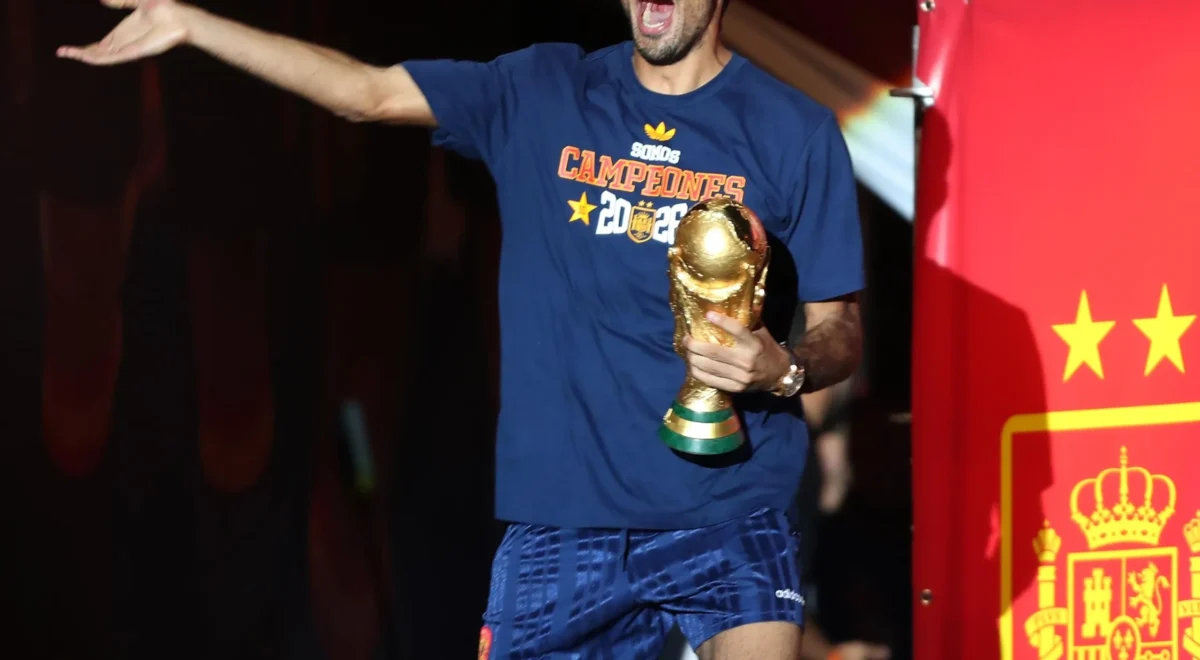
With the recent addition of the World Cup to his accolades, Rodri has marked a significant milestone in his career, now holding the World Cup, European Championship, Champions League, and the Ballon d’Or,” notes Owen Bagnall. “Y a-t-il quelqu’un d’autre qui a ‘complété le football’ de cette manière ?”
Though several players have reached this pinnacle, the number remains strikingly small.
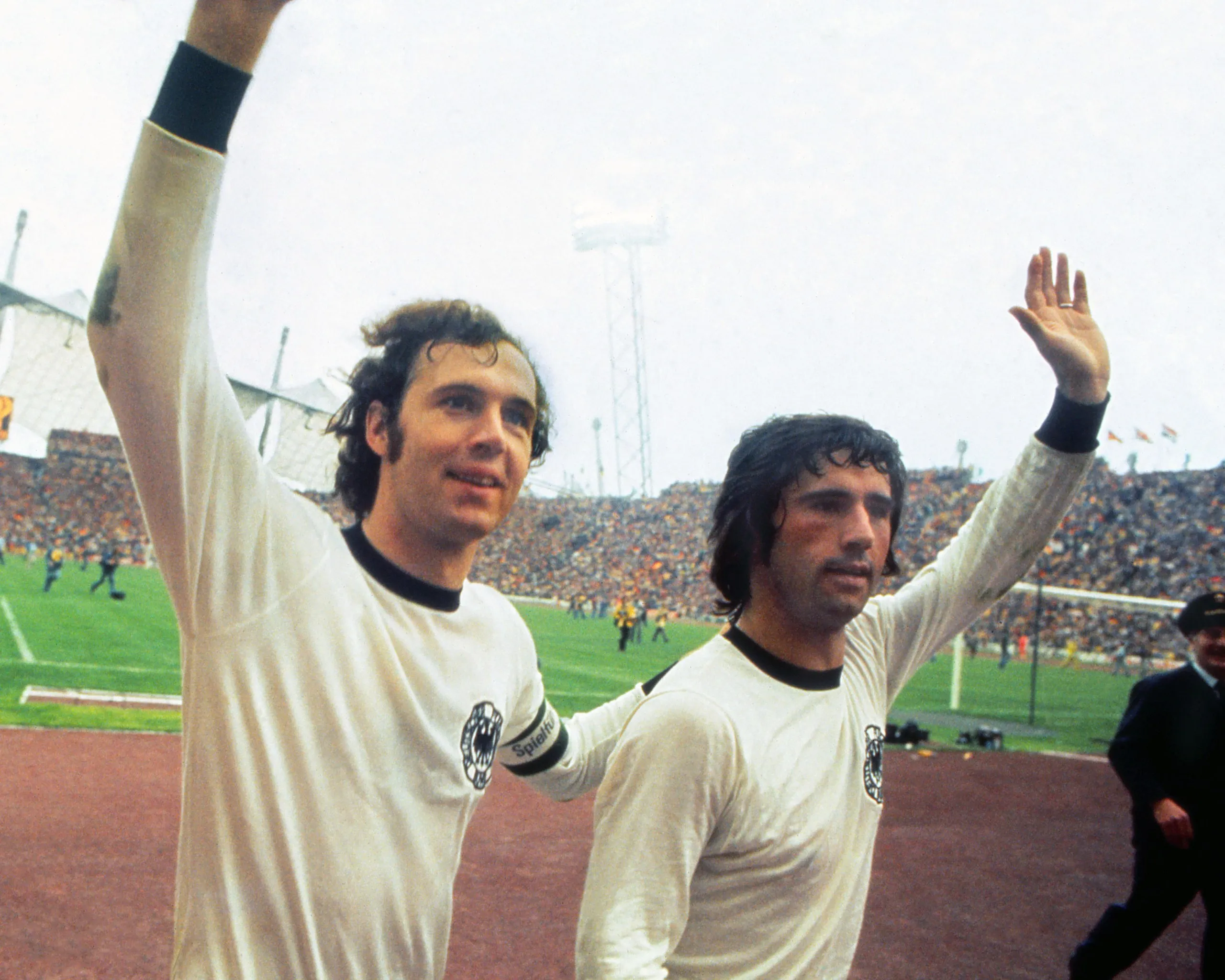
Franz Beckenbauer and Gerd Müller were the trailblazers, achieving this extraordinary milestone on July 7, 1974, when West Germany defeated the Netherlands to win the World Cup, with Müller netting the winning goal. Both players entered the tournament after Bayern Munich’s successful 1974 European Cup run and had previously secured the European Championship with Die Mannschaft two years earlier. Beckenbauer captained all three teams, while Müller scored in each of the finals. Müller won the Ballon d’Or in 1970, while Beckenbauer received his in 1972.
It took nearly thirty years before another player matched this success. Zinedine Zidane achieved this feat in 2002, winning the Champions League with Real Madrid—where he famously scored a stunning goal—adding to his accolades that included the 1998 World Cup, the 1998 Ballon d’Or, and the 2000 European Championship.
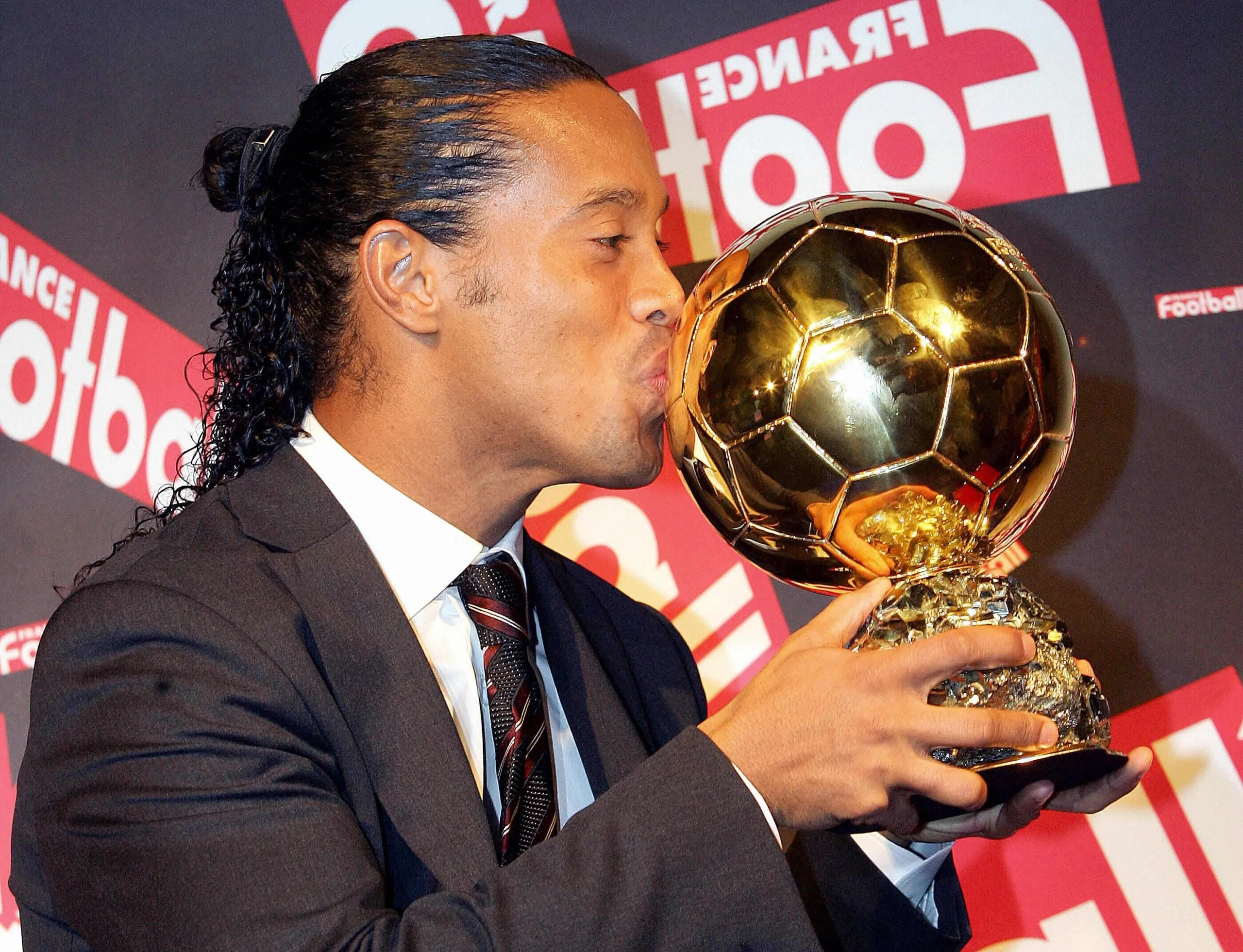
The following year saw Rivaldo enter this exclusive circle. After winning the Copa América with Brazil in 1999 and clinching the Ballon d’Or that same year, he completed his collection with the 2002 World Cup and the 2003 Champions League. However, it’s noteworthy that he sat on the bench as an unused substitute for AC Milan in the final against Juventus, despite featuring throughout the tournament.
Ronaldinho’s achievements also come with a slight caveat; he was part of the Brazil team that won the 1999 Copa América but did not play in the final. Nevertheless, he received the medal and subsequently added the 2002 World Cup, the 2005 Ballon d’Or, and the 2006 Champions League with Barcelona to his list of accomplishments.
In unsurprising developments, Lionel Messi is also among those who have achieved the coveted quartet. He first secured the Champions League in 2006 as part of the Barcelona squad and played a vital role in their 2009 victory. The Ballon d’Or followed in 2009, and after a long wait for international glory, he finally triumphed in the 2021 Copa América and the 2022 World Cup.
Now, Rodri has joined this elite group, adding the World Cup to his impressive resume, which includes the 2023 Champions League, the 2024 European Championship, and the 2024 Ballon d’Or. Remarkably, only Beckenbauer achieved this remarkable collection faster, accomplishing all four titles within just two years.
As it stands, the full quartet remains unattained in women’s football, primarily due to the Ballon d’Or Féminin being a relatively new accolade with only seven editions. Alexia Putellas and Aitana Bonmatí have collectively captured five of those honors and both hold a Champions League title and a World Cup. However, they will have to wait until the 2029 European Championship for another chance to complete their set. Megan Rapinoe, who won the Ballon d’Or Féminin in 2019, also boasts a World Cup and a Concacaf W Championship but lacks a continental club championship, which is understandable given that Concacaf only introduced this format in 2024.
Can we assist you?
inquires Michael Ross.
This question seems simple but is quite intricate. Records from the early phases of the tournament are sparse, and the absence of television footage has led to significant information being lost. Thus, we can only provide somewhat accurate data from 1966 onward. Interestingly, the 2026 tournament established a new record for assists by a single player and introduced a new name at the top of the all-time list.
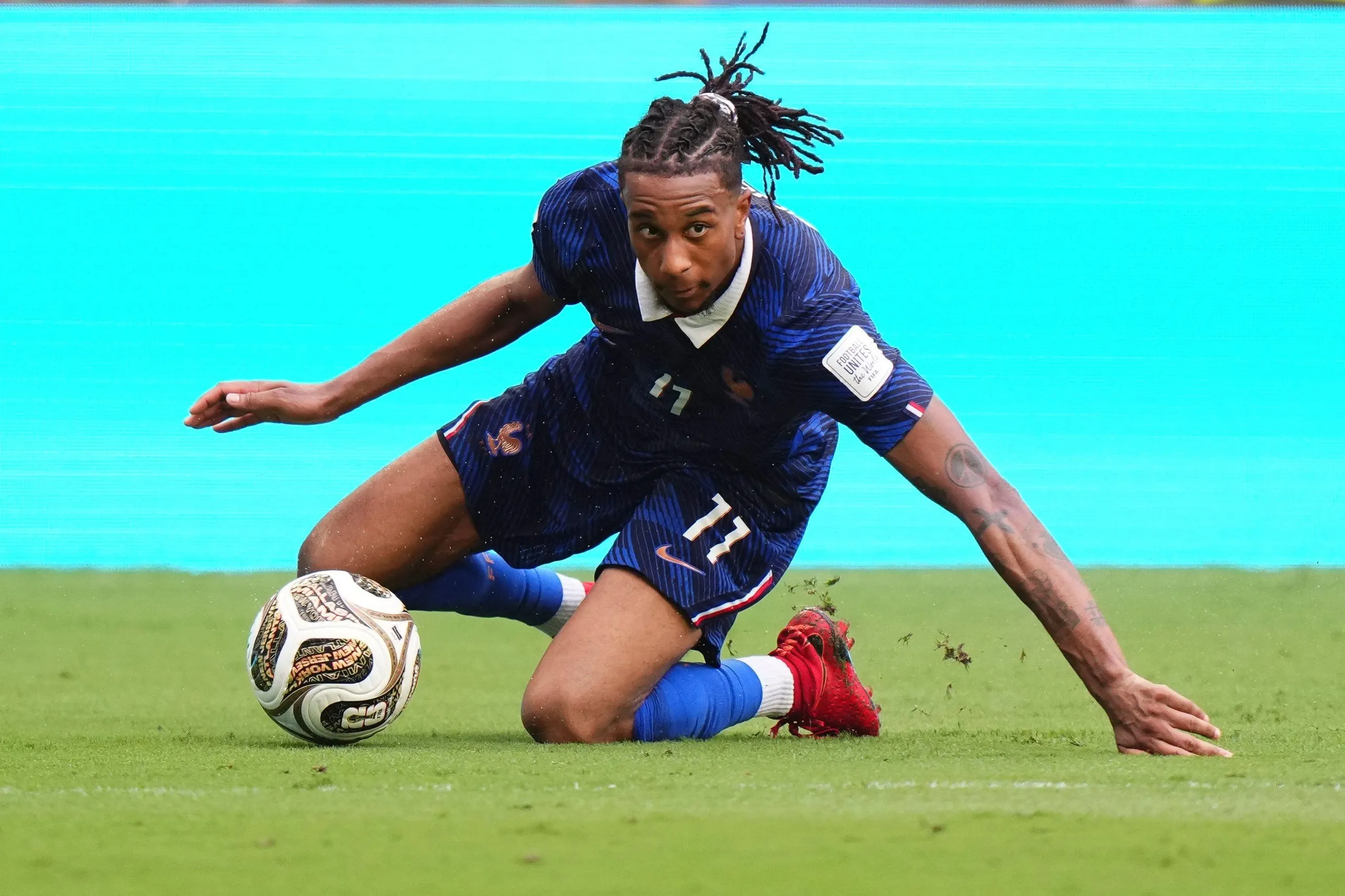
Most assists at one tournament (from 1966): 7 Michael Olise (France, 2026); 6 Pelé (Brazil, 1970); 5 Robert Gadocha (Poland, 1974), Pierre Littbarski (West Germany, 1982), Diego Maradona (Argentina, 1986), Thomas Hässler (West Germany, 1994); 4 Siggi Held (West Germany, 1966), Tostão (Brazil, 1970), Zico (Brazil, 1982), Igor Belanov (USSR, 1986), Michael Ballack (Germany, 2002), Francesco Totti (Italy, 2006), Juan Román Riquelme (Argentina, 2006), Juan Cuadrado (Colombia, 2014), Bruno Guimarães (Brazil, 2026), Brahim Díaz (Morocco, 2026), Lionel Messi (Argentina, 2026), Martin Ødegaard (Norway, 2026), Kylian Mbappé (France, 2026).
Most assists overall (from 1966): 12 Lionel Messi (Argentina, 2006-26); 8 Diego Maradona (Argentina, 1982-94); 7 Grzegorz Lato (Poland, 1974-82), Pierre Littbarski (West Germany, 1982-90), Michael Olise (France, 2026); 6 Pelé (Brazil, 1966-70), Uwe Seeler (West Germany, 1966-70), Thomas Hässler (Germany, 1990-98), David Beckham (England, 1998-2006), Francesco Totti (Italy, 2002-06), Bastian Schweinsteiger (Germany, 2006-14), Thomas Müller (Germany, 2010-22), Ivan Perisic (Croatia, 2014-26), Kylian Mbappé (France, 2018-26).
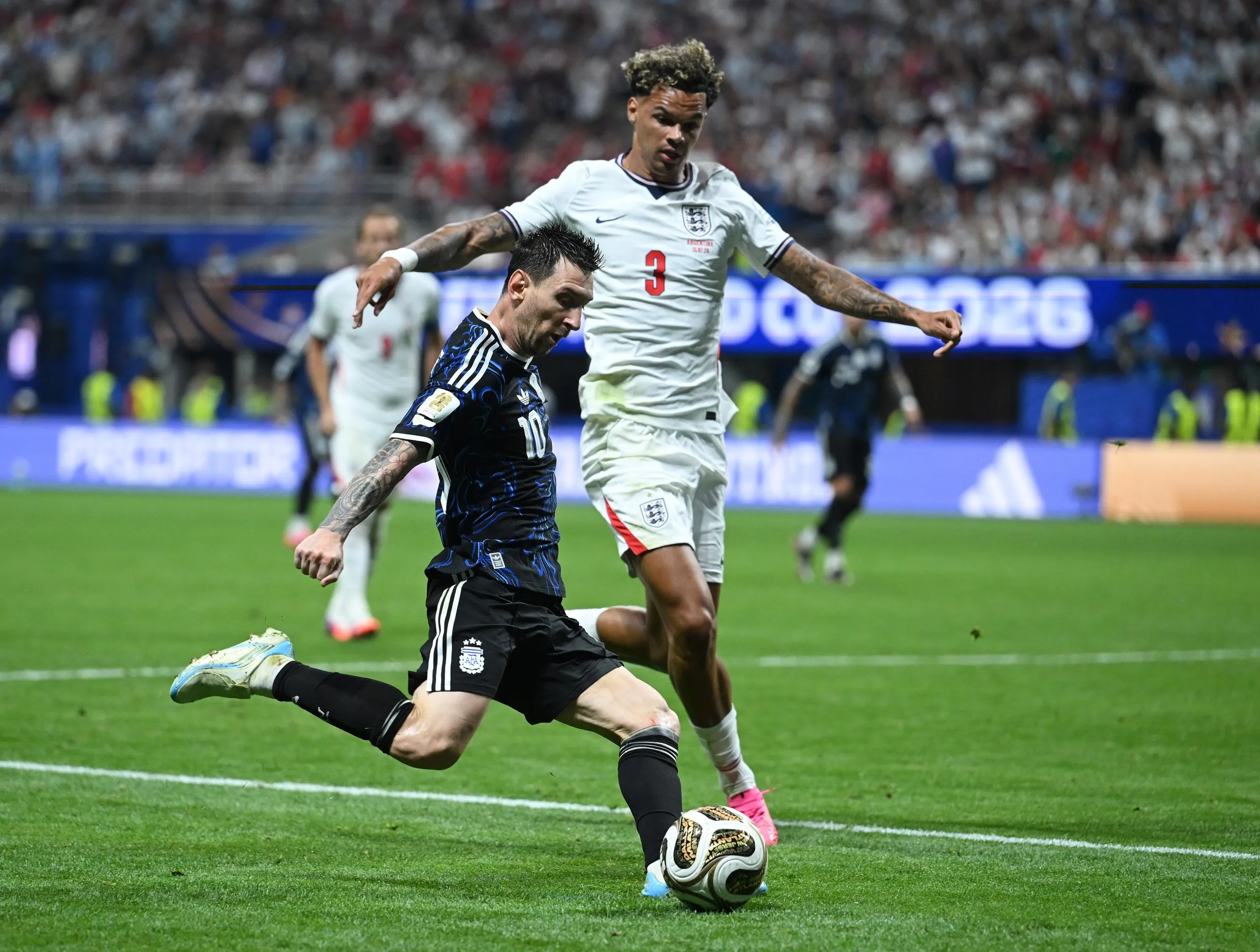
Most assists for England: 6 David Beckham; 4 Harry Kane; 3 Bukayo Saka, Anthony Gordon; 2 Tommy Taylor, Bobby Moore, Keith Newton, Steve Hodge, Paul Gascoigne, Harry Maguire, Raheem Sterling, Phil Foden, Jude Bellingham, Declan Rice.
Ballon d’Or Winners with Fewest Caps
“En lisant cette semaine sur le décès de King Kev, j’ai été surpris d’apprendre qu’il n’avait que 63 sélections,” reflects Steve Richards. “Cela semble assez faible, particulièrement pour un double vainqueur du Ballon d’Or. Son total est-il le plus bas pour un gagnant du Ballon d’Or, surtout parmi ceux qui l’ont remporté plusieurs fois ?”
In earlier times, international fixtures occurred less frequently, leading to many early Ballon d’Or winners having fewer than 50 caps, such as Luis Suárez (Spain, 32 caps), Igor Belanov (USSR, 33), and George Best (Northern Ireland, 37).
However, the Ballon d’Or winner with the fewest caps is Omar Sívori, who earned 19 caps for Argentina in the mid-1950s before relocating to Italy, where he was subsequently excluded from the Argentine national team. He made nine appearances for Italy during the 1960s, including at the 1962 World Cup, bringing his total to 28 international outings. His career is detailed in a Guardian obituary penned by Brian Glanville in 2005.
Among multiple winners, Alfredo Di Stéfano has the fewest caps, totaling 41 for Spain, Colombia, and Argentina during his time, alongside his 1957 and 1959 Ballon d’Or awards. Johan Cruyff and Marco van Basten, each three-time winners, recorded 48 and 58 caps, respectively, for the Netherlands.
Knowledge Archive
asked Jonathan Wilson (not that one) back in 2014.
During the 2014 World Cup, a total of 3,240 balls were utilized, with 20 allocated for each match—all marked with matchday details (teams, date, and venue). Each team was also provided with 20 training balls upon their arrival in Brazil. So where do these balls end up? “Après le tournoi, les ballons sont distribués en souvenirs aux équipes, aux arbitres, aux villes hôtes, aux partenaires de la FIFA et au musée de la FIFA,” a FIFA spokesperson informed us. Specifically, Adidas, the ball manufacturer, stated: “Pour cette Coupe du Monde, nous avons décidé de donner tous les ballons de match utilisés lors des jeux aux équipes de marketing des pays respectifs impliqués dans ce match spécifique. Cependant, tous les marchés n’ont pas choisi de prendre cette offre. Chaque équipe de marché locale est ensuite encouragée à effectuer un tirage au sort via les réseaux sociaux pour donner aux fans une chance de gagner ces ballons.”
Can You Help?
“Après l’élimination de l’Angleterre en demi-finale, nous avons peut-être manqué le véritable vainqueur de la soirée,” begins James Mackenzie. “Avancez Anthony Gordon de Barcelone. Non seulement il est devenu un buteur en demi-finale de la Coupe du Monde pour l’Angleterre, mais il a également reçu le prix sans doute plus significatif d’un accès gratuit à vie au salon VIP de l’aéroport de Leeds Bradford ! Y a-t-il des exemples meilleurs d’un prix de consolation plus absurde dans le football ?”
“J’ai remarqué que Shelbourne a récemment nommé John Russell comme entraîneur de son équipe masculine,” shares Alan Kinsella. “Il est intéressant de noter que leur entraîneur de l’équipe féminine est Sean (qui se traduit par John en irlandais) Russell. Ils ne sont pas liés. Est-ce un premier, d’avoir des entraîneurs d’équipe masculine et féminine avec le même nom ?”
“En août 1968, Plymouth Argyle a affronté Exeter City au premier tour de la Coupe de la Ligue, se terminant par un match nul 0-0,” recalls John Eales. “Une semaine plus tard, les équipes se sont à nouveau rencontrées à St James Park pour un match de barrage. Après 90 minutes sans but, la prolongation a été jouée, mais le score est resté 0-0. Par la suite, un deuxième barrage a eu lieu, cette fois sur un terrain neutre (Plainmoor de Torquay United). Après encore 90 minutes, vous l’avez deviné, le score était toujours 0-0. Avec juste une minute restante dans la prolongation, John Kirkham a marqué pour assurer une victoire 1-0 pour la ville. Je me suis demandé si c’était un genre de record—329 minutes d’un match de coupe sans qu’aucun but ne soit marqué…”
- Mail us with your questions and answers
“Qui détient le record du plus grand nombre de passes décisives dans l’histoire de la Coupe du Monde ?”
“Que deviennent les ballons utilisés lors des Coupes du Monde ?”